Buy sublimationtalk.com ?
We are moving the project
sublimationtalk.com .
Are you interested in purchasing the domain
sublimationtalk.com ?
domain@kv-gmbh.de · 0541-91531010
Buy sublimationtalk.com ?
Which religion teaches mindfulness?
Buddhism is a religion that teaches mindfulness as a core practice. Mindfulness is an essential aspect of Buddhist teachings, particularly in the form of meditation. Practicing mindfulness in Buddhism involves being fully present and aware of one's thoughts, feelings, and surroundings without judgment. This practice is believed to lead to greater self-awareness, inner peace, and spiritual growth. **
What are meditation and mindfulness?
Meditation is a practice that involves focusing the mind on a particular object, thought, or activity to train attention and awareness, and achieve a mentally clear and emotionally calm state. Mindfulness is a type of meditation that involves paying attention to the present moment without judgment. It involves being fully aware of your thoughts, feelings, bodily sensations, and surrounding environment. Both meditation and mindfulness have been shown to have numerous benefits for mental and physical well-being, including reducing stress, improving focus, and enhancing overall quality of life. **

Similar search terms for Religion
Top-Angebote
Products related to Religion:
-
Inspired Deals Natural Amethyst Bracelet Crystal Healing Stretch Purple Gemstone Bracelet For Meditation And Mindfulness Natural Amethyst Bracelet Crystal Healing Stretch Purple Gemstone Bracelet For Meditation And MindfulnessExperience a sense of calm while adding timeless beauty to your everyday style with this Amethyst Bracelet. Designed for anyone who values meaningful jewelry, this elegant stretch bracelet features genuine purple gemstone beads that pair...32,97 $*Shipping: 0,00 $Secure redirect to the provider
-
The End of Faith: Religion, Terror, and the Future of Reason by Sam HarrisDescription. This important and timely book delivers a startling analysis of the clash of faith and reason in today's world. Sam Harris offers a vivid historical tour of mankind's willingness to suspend reason in favour of religious beliefs, even when those beliefs are used to justify harmful behaviour and sometimes heinous crimes. He asserts that in the shadow of weapons of mass destruction, we can no longer tolerate views that pit one true god against another. Most controversially, he argues that we cannot afford moderate lip service to religion -- an accommodation that only blinds us to the real perils of fundamentalism. While warning against the encroachment of organised religion into world politics, Harris also draws on new evidence from neuroscience and insights from philosophy to explore spirituality as a biological, brain-based need. He calls on us to invoke that need in taking a secular humanistic approach to solving the problems of this world.. Title. The End of Faith: Religion, Terror, and the Future of Reason by Sam Harris. Delivery. Content. Reviews6,99 £*Shipping: 2,99 £Secure redirect to the provider
-
God Is Not Great: How Religion Poisons Everything by Christopher Hitchens - Non Fiction - PaperbackTitle:. God Is Not Great: How Religion Poisons Everything Condition: BRAND NEW. Format: Paperback. ISBN: 9781843545743 Overview:. God Is Not Great: How Religion Poisons Everything is Christopher Hitchens’s blistering, meticulously argued case against faith. Written with audacious clarity, it surveys a vast terrain—from ancient sacred texts to modern religious institutions—and exposes how religious belief has shaped cultures, politics, and personal morality in ways that can be harmful, suppressive, or illusory. Hitchens contends that religion is not a mere private matter, but a force with public consequences: it has often distorted science and education, justified violence and discrimination, and obstructed humane, evidence-based inquiry. Yet this is not a dry catalog of doom; it is a lucid invitation to think critically, to test ideas against reason and evidence, and to imagine a world where ethics and compassion can flourish without recourse to supernatural authority. The writing is as accessible as it is provocative, pairing crisp logic with sharp wit, making complex arguments approachable for curious readers, students, and general non-fiction lovers alike. This paperback edition brings a controversial, timely dialogue into reach for a broad audience: a fearless primer for anyone exploring the clash between faith and reason, belief and doubt, and how we choose to live together in a secular age. What Makes This Book Stand Out:. Few books fuse polemic with scholarship as effectively as God Is Not Great. Hitchens brings a panoramic read—textual analysis of sacred writings, historical case studies, and cultural critique—into one compact, argument-driven volume. He uses accessible, often quotable prose to illuminate how religious narratives shape laws, education, and public policy while posing hard questions about morality outside doctrinal dictates. The book’s strength lies in its relentless, cross-disciplinary reach: philosophy, history, anthropology, and science intersect to question authority without silencing dissent. Hitchens’s voice—witty, unswerving, and intellectually rigorous—transforms a controversial stance into a compelling intellectual adventure. For readers seeking a sturdy, well-supported challenge to religious privilege, this work remains a benchmark in secular thought, inviting readers to examine how belief systems influence everyday life and to consider the benefits of a reasoning-driven worldview. Who This Book Is Perfect For:. Ideal for adults and young adults with an appetite for rigorous ideas and lively debate. It suits students studying religion, philosophy, or political history, book clubs focused on non-fiction inquiry, and gift buyers seeking a provocative, conversation-starting title for skeptics and curious readers alike. If you enjoy clear, evidence-based arguments about big questions—how belief intersects with science, governance, and ethics—this book will resonate. It also serves as a bold, conversation-sparking...10,99 £*Shipping: 2,99 £Secure redirect to the provider


-
Is loving-kindness meditation sufficient instead of mindfulness meditation?
Loving-kindness meditation and mindfulness meditation serve different purposes and can complement each other. While mindfulness meditation focuses on being present and aware of one's thoughts and feelings without judgment, loving-kindness meditation cultivates feelings of compassion and goodwill towards oneself and others. Both practices can be beneficial for overall well-being, and individuals may choose to incorporate both into their meditation routine for a more holistic approach to mental and emotional health. Ultimately, the effectiveness of each practice depends on the individual's specific needs and goals. **
-
Does meditation contradict religion and who has it helped?
Meditation does not necessarily contradict religion, as it can be practiced in a way that aligns with one's religious beliefs. Many religious traditions incorporate meditation as a spiritual practice, such as in Buddhism, Hinduism, and Christianity. Meditation has helped people from various religious backgrounds, as well as those who do not identify with any particular religion. It has been shown to reduce stress, improve mental clarity, and promote overall well-being for individuals of all faiths. **
-
What is the difference between mantra meditation and mindfulness meditation?
Mantra meditation involves focusing on a specific word, phrase, or sound to quiet the mind and cultivate a sense of inner peace. This repetition helps to anchor the mind and prevent distractions. On the other hand, mindfulness meditation involves being fully present in the moment, observing thoughts, feelings, and sensations without judgment. It emphasizes awareness of the present moment and acceptance of whatever arises. Both practices can help reduce stress and improve overall well-being, but they differ in their specific techniques and focuses. **
-
Do you have experience with mindfulness meditation?
As an AI, I do not have personal experiences or consciousness to practice mindfulness meditation. However, I have been programmed with knowledge about mindfulness meditation and its benefits. If you have any questions or need guidance on mindfulness meditation techniques, feel free to ask! **


Can mindfulness meditation also have no benefit?
While mindfulness meditation has been shown to have numerous benefits for mental and physical well-being, it is possible that it may not have a positive impact on everyone. Some individuals may not find mindfulness meditation helpful due to personal preferences, lack of consistency in practice, or underlying mental health conditions that require additional support. It is important to recognize that mindfulness meditation is not a one-size-fits-all solution and that different practices or therapies may be more effective for some individuals. **
Which religion teaches the most mindfulness and which teaches the most respect towards animals?
Buddhism is often associated with teaching the most mindfulness, as it emphasizes being present in the moment and cultivating awareness of one's thoughts and actions. On the other hand, Jainism is known for teaching the most respect towards animals, as its followers adhere to a strict principle of non-violence towards all living beings, including animals. Jainism's belief in ahimsa, or non-violence, extends to the smallest of creatures, making it one of the most animal-friendly religions. **
Top-Angebote
Products related to Religion:
-
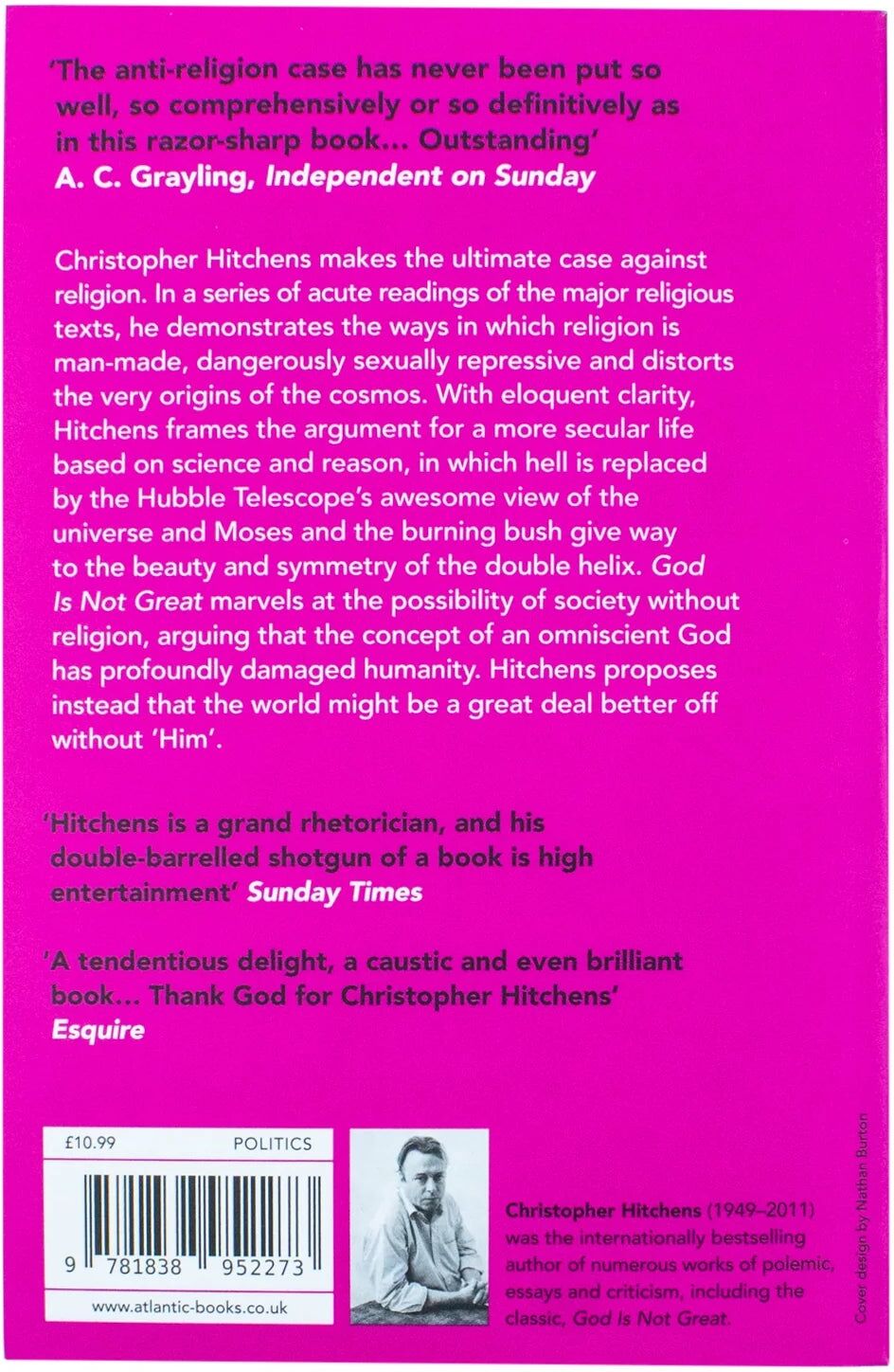
Atlantic Books God Is Not Great: The Case Against Religion by Christopher Hitchens - Paperback - Non-Fiction Religion & Philosophy - NewGod Is Not Great: The Case Against Religion is a fearless and formidably argued polemic by Christopher Hitchens that questions the role of organised religion in human history. Blending sharp wit with rigorous scholarship, Hitchens dissects sacred texts and religious institutions, arguing that faith has too often fuelled division, repression and violence. This landmark work of intellectual non-fiction remains a significant contribution to the discussion of religion and reason, essential reading for those interested in the topic. About the book, Christopher Hitchens builds a comprehensive case against organised religion, drawing on history, philosophy, science and literature. He examines the major world faiths, arguing that religious doctrine is man-made rather than divinely inspired, and that many of its claims are contentious.3,99 £*Shipping: 2,99 £Secure redirect to the provider
-
God Is Not Great: The Case Against Religion by Christopher HitchensDescription. Condition: BRAND NEW. Format: Paperback. god Is Not Great is the ultimate case against religion. In a series of acute readings of the major religious texts, Christopher Hitchens demonstrates the ways in which religion is man-made, dangerously sexually repressive and distorts the very origins of the cosmos. Above all, Hitchens argues that the concept of an omniscient God has profoundly damaged humanity, and proposes that the world might be a great deal better off without 'him'. In god is Not Great Hitchens turned his formidable eloquence and rhetorical energy to the most controversial issue in the world: God and religion. The result is a devastating critique of religious faith. Title. God Is Not Great: The Case Against Religion by Christopher Hitchens. Delivery. Content. Reviews3,99 £*Shipping: 2,99 £Secure redirect to the provider
-
Inspired Deals Natural Amethyst Bracelet Crystal Healing Stretch Purple Gemstone Bracelet For Meditation And Mindfulness Natural Amethyst Bracelet Crystal Healing Stretch Purple Gemstone Bracelet For Meditation And MindfulnessExperience a sense of calm while adding timeless beauty to your everyday style with this Amethyst Bracelet. Designed for anyone who values meaningful jewelry, this elegant stretch bracelet features genuine purple gemstone beads that pair...32,97 $*Shipping: 0,00 $Secure redirect to the provider
-
Which religion teaches mindfulness?
Buddhism is a religion that teaches mindfulness as a core practice. Mindfulness is an essential aspect of Buddhist teachings, particularly in the form of meditation. Practicing mindfulness in Buddhism involves being fully present and aware of one's thoughts, feelings, and surroundings without judgment. This practice is believed to lead to greater self-awareness, inner peace, and spiritual growth. **
-
What are meditation and mindfulness?
Meditation is a practice that involves focusing the mind on a particular object, thought, or activity to train attention and awareness, and achieve a mentally clear and emotionally calm state. Mindfulness is a type of meditation that involves paying attention to the present moment without judgment. It involves being fully aware of your thoughts, feelings, bodily sensations, and surrounding environment. Both meditation and mindfulness have been shown to have numerous benefits for mental and physical well-being, including reducing stress, improving focus, and enhancing overall quality of life. **
-
Is loving-kindness meditation sufficient instead of mindfulness meditation?
Loving-kindness meditation and mindfulness meditation serve different purposes and can complement each other. While mindfulness meditation focuses on being present and aware of one's thoughts and feelings without judgment, loving-kindness meditation cultivates feelings of compassion and goodwill towards oneself and others. Both practices can be beneficial for overall well-being, and individuals may choose to incorporate both into their meditation routine for a more holistic approach to mental and emotional health. Ultimately, the effectiveness of each practice depends on the individual's specific needs and goals. **
-
Does meditation contradict religion and who has it helped?
Meditation does not necessarily contradict religion, as it can be practiced in a way that aligns with one's religious beliefs. Many religious traditions incorporate meditation as a spiritual practice, such as in Buddhism, Hinduism, and Christianity. Meditation has helped people from various religious backgrounds, as well as those who do not identify with any particular religion. It has been shown to reduce stress, improve mental clarity, and promote overall well-being for individuals of all faiths. **
Similar search terms for Religion
-
The End of Faith: Religion, Terror, and the Future of Reason by Sam HarrisDescription. This important and timely book delivers a startling analysis of the clash of faith and reason in today's world. Sam Harris offers a vivid historical tour of mankind's willingness to suspend reason in favour of religious beliefs, even when those beliefs are used to justify harmful behaviour and sometimes heinous crimes. He asserts that in the shadow of weapons of mass destruction, we can no longer tolerate views that pit one true god against another. Most controversially, he argues that we cannot afford moderate lip service to religion -- an accommodation that only blinds us to the real perils of fundamentalism. While warning against the encroachment of organised religion into world politics, Harris also draws on new evidence from neuroscience and insights from philosophy to explore spirituality as a biological, brain-based need. He calls on us to invoke that need in taking a secular humanistic approach to solving the problems of this world.. Title. The End of Faith: Religion, Terror, and the Future of Reason by Sam Harris. Delivery. Content. Reviews6,99 £*Shipping: 2,99 £Secure redirect to the provider
-
God Is Not Great: How Religion Poisons Everything by Christopher Hitchens - Non Fiction - PaperbackTitle:. God Is Not Great: How Religion Poisons Everything Condition: BRAND NEW. Format: Paperback. ISBN: 9781843545743 Overview:. God Is Not Great: How Religion Poisons Everything is Christopher Hitchens’s blistering, meticulously argued case against faith. Written with audacious clarity, it surveys a vast terrain—from ancient sacred texts to modern religious institutions—and exposes how religious belief has shaped cultures, politics, and personal morality in ways that can be harmful, suppressive, or illusory. Hitchens contends that religion is not a mere private matter, but a force with public consequences: it has often distorted science and education, justified violence and discrimination, and obstructed humane, evidence-based inquiry. Yet this is not a dry catalog of doom; it is a lucid invitation to think critically, to test ideas against reason and evidence, and to imagine a world where ethics and compassion can flourish without recourse to supernatural authority. The writing is as accessible as it is provocative, pairing crisp logic with sharp wit, making complex arguments approachable for curious readers, students, and general non-fiction lovers alike. This paperback edition brings a controversial, timely dialogue into reach for a broad audience: a fearless primer for anyone exploring the clash between faith and reason, belief and doubt, and how we choose to live together in a secular age. What Makes This Book Stand Out:. Few books fuse polemic with scholarship as effectively as God Is Not Great. Hitchens brings a panoramic read—textual analysis of sacred writings, historical case studies, and cultural critique—into one compact, argument-driven volume. He uses accessible, often quotable prose to illuminate how religious narratives shape laws, education, and public policy while posing hard questions about morality outside doctrinal dictates. The book’s strength lies in its relentless, cross-disciplinary reach: philosophy, history, anthropology, and science intersect to question authority without silencing dissent. Hitchens’s voice—witty, unswerving, and intellectually rigorous—transforms a controversial stance into a compelling intellectual adventure. For readers seeking a sturdy, well-supported challenge to religious privilege, this work remains a benchmark in secular thought, inviting readers to examine how belief systems influence everyday life and to consider the benefits of a reasoning-driven worldview. Who This Book Is Perfect For:. Ideal for adults and young adults with an appetite for rigorous ideas and lively debate. It suits students studying religion, philosophy, or political history, book clubs focused on non-fiction inquiry, and gift buyers seeking a provocative, conversation-starting title for skeptics and curious readers alike. If you enjoy clear, evidence-based arguments about big questions—how belief intersects with science, governance, and ethics—this book will resonate. It also serves as a bold, conversation-sparking...10,99 £*Shipping: 2,99 £Secure redirect to the provider
-
The Righteous Mind: Why Good People are Divided by Politics and Religion by Jonathan HaidtDescription. 'A landmark contribution to humanity's understanding of itself' The New York Times. Why can it sometimes feel as though half the population is living in a different moral universe? Why do ideas such as 'fairness' and 'freedom' mean such different things to different people? Why is it so hard to see things from another viewpoint? Why do we come to blows over politics and religion?. Jonathan Haidt reveals that we often find it hard to get along because our minds are hardwired to be moralistic, judgemental and self-righteous. He explores how morality evolved to enable us to form communities, and how moral values are not just about justice and equality - for some people authority, sanctity or loyalty matter more. Morality binds and blinds, but, using his own research, Haidt proves it is possible to liberate ourselves from the disputes that divide good people.. Title. The Righteous Mind: Why Good People are Divided by Politics and Religion by Jonathan Haidt. Delivery. Content. Reviews99,99 £*Shipping: 0,00 £Secure redirect to the provider
-
Art of Mindfulness for Beginners: Art Therapy & Nature - Paperback Self-Help Book by B Jain Publishing - Mindfulness & Art Therapy for AdultsDiscover a gentle and accessible guide to mindfulness through art therapy and nature. This beginner-friendly paperback is designed for those looking to slow down and reconnect with the present moment through creative expression. Blending simple art-making exercises with the calming influence of the natural world, it provides practical tools for reducing stress. No artistic experience is required, just an open mind and a willingness to explore mindfulness through colour, texture, and the rhythms of nature. This book sits at the crossroads of art therapy and nature-based mindfulness, two disciplines that can help ease everyday anxiety and mental fatigue. Rather than focusing on technical drawing or painting skill, the book centres on process over product, guiding readers through a series of exercises that promote mindfulness and self-discovery. Published by B Jain Publishing, this paperback is a great resource for anyone looking to cultivate a greater sense of calm and well-being in their daily lives.3,49 £*Shipping: 2,99 £Secure redirect to the provider
-
What is the difference between mantra meditation and mindfulness meditation?
Mantra meditation involves focusing on a specific word, phrase, or sound to quiet the mind and cultivate a sense of inner peace. This repetition helps to anchor the mind and prevent distractions. On the other hand, mindfulness meditation involves being fully present in the moment, observing thoughts, feelings, and sensations without judgment. It emphasizes awareness of the present moment and acceptance of whatever arises. Both practices can help reduce stress and improve overall well-being, but they differ in their specific techniques and focuses. **
-
Do you have experience with mindfulness meditation?
As an AI, I do not have personal experiences or consciousness to practice mindfulness meditation. However, I have been programmed with knowledge about mindfulness meditation and its benefits. If you have any questions or need guidance on mindfulness meditation techniques, feel free to ask! **
-
Can mindfulness meditation also have no benefit?
While mindfulness meditation has been shown to have numerous benefits for mental and physical well-being, it is possible that it may not have a positive impact on everyone. Some individuals may not find mindfulness meditation helpful due to personal preferences, lack of consistency in practice, or underlying mental health conditions that require additional support. It is important to recognize that mindfulness meditation is not a one-size-fits-all solution and that different practices or therapies may be more effective for some individuals. **
-
Which religion teaches the most mindfulness and which teaches the most respect towards animals?
Buddhism is often associated with teaching the most mindfulness, as it emphasizes being present in the moment and cultivating awareness of one's thoughts and actions. On the other hand, Jainism is known for teaching the most respect towards animals, as its followers adhere to a strict principle of non-violence towards all living beings, including animals. Jainism's belief in ahimsa, or non-violence, extends to the smallest of creatures, making it one of the most animal-friendly religions. **
* All prices are inclusive of VAT and, if applicable, plus shipping costs. The offer information is based on the details provided by the respective shop and is updated through automated processes. Real-time updates do not occur, so deviations can occur in individual cases. ** Note: Parts of this content were created by AI.